
Confraternity of Penitents Newsletter May 2026
Thoughts from the Spiritual Guardian (Third Part in a Series)
I.The Spiritual Anatomy of Acedia: The Noonday Demon
The desert fathers called acedia the “noonday demon.” Noon is the hour of duration. It is not the thrill of beginnings or the desperation of endings. It is the long middle, when the sun seems to stand still.
Acedia is not simply laziness.
It is not ordinary fatigue.
It is not identical to clinical depression (though depression must be treated seriously and compassionately).
Acedia is spiritual resistance to the good precisely because the good feels demanding, repetitive, or unseen.
It manifests as an interior sigh toward fidelity. The penitent who has prayed daily for years suddenly feels prayer is dry and pointless. The one who has fasted faithfully begins to question whether sacrifice matters. The one who has simplified possessions begins to envy comfort. The one who has worn the visible cross begins to wish for invisibility.
Acedia whispers in half-truths:
-
“Is this necessary?”
-
“Is this sustainable?”
-
“Does anyone notice?”
-
“Would God really mind if you relaxed a little?”
Notice: it does not begin by attacking Christ. It attacks the path to Christ. It does not begin by saying, “Stop loving God.” It says, “Be reasonable. Lower the intensity. You can do less. You deserve more comfort.”
And acedia is especially dangerous for penitents precisely because your vocation is stable, daily, and domestic. There is no novelty to feed on. Which is why Franciscan penance must always be anchored in something deeper than novelty. That “something deeper” is love—covenant love. – Fr. Joseph Tuscan, OFM Cap, Spiritual Guardian


May Franciscan Saints for the Franciscan Jubilee Year--By Mariah Dragolich, CfP
May 9 -- St Catherine of Bologna, Italian nun, mystic, writer and artist. Patron saint of artists and against temptations. She was born in 1413 to a noble family and was well educated in reading, writing, Latin, music, painting and playing the viola. Contrary to her privileged upbringing she felt a call to religious life and at age 13 joined a lay religious community and at age 19 co-founded a convent of poor Clares where she served as abbess until her death in 1463. She was known for her humility and poverty and treatises on religious perfection.
May 11 - Saint Ignatius of Laconi was the second born of seven children to poor peasant farmers where he worked the land and often call his local church his “home”. Suffering serious illness at age 17 he promised he would consecrate himself to God and join the Order of Friars Minor Capuchin if he recovered. He did recover but upon the request of his father to wait and assist his family in working the fields he delayed his vow. At 20 years old he suffered a life threatening incident where he lost control of his horse and just as suddenly the horse was calmed and trotted along safely. At that moment he felt the Lord had preserved his life and without delay pursued religious life. As a Capuchin he dedicated himself to service, obedience to superiors and devotion. He spent 40 of his years as a beggar, going house to house to beg for food to support the friary. People soon yearned for visits from this poor humble friar as he offered solace to sick and lonely, brought joy to children, mediated conflicts. Miracles of healing were attributed to his intercession. He could not read but loved to listen to the Gospels, was blessed with gifts of prophecy and miracles and devoted himself to prayer before the tabernacle. He died at 80 years of age.
May 16: Saint Margaret of Cortona was born in Italy to a poor farming family. Having lost her mother at a young age she eventually left home to live with a man of whom she bore a son but never married. The murder of her companion suddenly changed her life. When she returned home to her father with her son, she was rejected. Eventually she found refuge with the Friars Minor who gave her shelter and spiritual guidance. Margaret experienced an intense, severe, and public conversion, asking for forgiveness for the scandal of her past. She eventually joined the Third Order of St Francis and later her son entered the Franciscan Order. She spent the rest of her life in performing acts of penance, in devout meditation and great love for our Lord in the Eucharist. She died in 1297.
May 17: Saint Paschal Baylon was born to a peasant family in Aragon, Spain, on Whitsunday in 1540. He was christened Pascua in honor of the feast day. In his youth, Paschal worked as a shepherd and was noted for his devotion to the Holy Eucharist, deep spirituality, and exceptional virtue. Self-taught, he learned to read without formal education. Paschal was renowned for his austerity and rigorous asceticism, and was believed to have performed miracles. A visionary experience led him to join a nearby Franciscan community. In 1564 he became a Franciscan lay brother of the Alcantarine reform within the Friars Minor. Assigned menial tasks, he served humbly as a doorkeeper throughout most of his religious life. Paschal wrote spiritual treatises reflecting his own religious experiences, and his wise counsel benefited many. His fervent love for the Blessed Sacrament marked his life. While on a mission to France, he courageously defended the doctrine of the Real Presence against a Calvinist preacher, despite threats from irate Calvinists. Paschal died at a friary in Villareal in 1592.
May 18: St. Felix of Cantalice (1515–1587) was an Italian Capuchin friar renowned for his humility and simple life. Born in Cantalice to a poor farming family, Felix spent his early years working as a shepherd and farm laborer. At age 31, Felix joined the Capuchin Franciscans in Rome, where he served as the order’s official beggar for over 40 years. He wandered the city with a sack, asking for food and donations for the friars and for the poor. Felix became known for his cheerful disposition, holiness, sincere gratitude, and kindness to all. He often greeted people with “Deo Gratias” ("Thanks be to God"). He was regarded as a spiritual counselor, offering advice to both laypeople and nobility. He spent much time in prayer, penance, and serving the needy. Felix died in Rome in 1587, and many miracles were attributed to him.
May 20 Saint Bernardine of Siena was born on September 8, 1380, in Massa Marittima, Tuscany, Italy. Orphaned at a young age, he was raised by a devoted aunt. As a young man, Bernardine studied in Siena, where he joined a confraternity dedicated to caring for the sick. During a plague outbreak in 1400, Bernardine tirelessly nursed the sick and managed a hospital in Siena, exposing himself to great personal risk. After the plague subsided, he entered the Franciscan Order in 1402 and was ordained a priest in 1404. Initially, Bernardine lived a life of prayer and study. Around 1417, he began preaching across Italy. Noted for his powerful oratory and devotion to the Holy Name of Jesus, he promoted moral reform and combated the spiritual ills of society. He also helped revive the Franciscan Order, inspiring a movement towards stricter observance of its rules. Bernardine refused several high-ranking positions in the Church, dedicating himself instead to preaching and reform. He wrote theological works on various topics and is credited with popularizing the "IHS" Christogram, a symbol of Jesus’ name. Exhausted by his constant travels, Bernardine died in L'Aquila, Italy, on May 20, 1444.
May 28 Mary Ann of Jesus of Paredes (Mariana de Jesús de Paredes y Flores, 1618–1645) was an Ecuadorian Roman Catholic mystic and saint, sometimes called the "Lily of Quito." She was born in Quito, Ecuador, into a noble family and was distinguished for her deep piety, austerity, and charity from a young age. Mariana led a life of prayer, penance, and service, dedicating herself to God as a hermit in her home. She practiced intense fasting and self-sacrifice, and was known for her charity toward the poor and sick. Her spiritual gifts included visions, ecstasies, and miraculous healings. During a plague in Quito, she offered her life for the city’s safety, which coincided with the end of the epidemic. She died at age 26 in 1645.

NO GREATER LOVE: BLOOD AND WATER
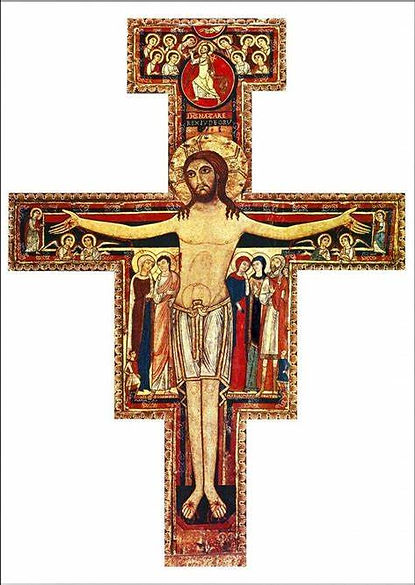
In Christian tradition, Pentecost Sunday, when the Holy Spirit visibly descended on the Apostles, is called the “Birthday of the Church”. We know, however, that the life of a human child does not begin at birth. This life began around nine months earlier when the child was conceived in the mother’s womb. When did the “life” of the Church actually begin? The Lord did speak of the “Church” during His Life on Earth, (Mt 16:18, 18:17) but this was in reference to something which was coming and not what was present at that time. The life of the Church actually began with the Death of the Lord on the Cross.
When the Lord died on the Cross, St. Matthew’s Gospel tells us of cosmic upheavals. “And behold, the curtain of the temple was torn in two, from top to bottom, and the earth shook, and the rocks were split; the tombs also were opened, and many bodies of the saints who had fallen asleep were raised, and coming out of the tombs after his resurrection they went into the holy city and appeared to many.” (Mt 27:51-53) The tearing of the curtain of the temple at the death of Jesus indicates that the barrier between humans and God has been removed. All who desire God can have access to Him. It should be noted that the “saints” came out of their tombs after the resurrection of the Lord. They could not come out of their tombs before. Why the big upheavals at the death of Jesus? When Jesus was baptized by John the Baptist, the Holy Spirit descended on Him like a dove and a voice from heaven came saying “This is my beloved Son, with whom I am well pleased.” (Mt 3:17) Shortly before the arrest of Jesus, on a high mountain, (Mount Tabor) Peter, James, and John again hear a voice from heaven saying, “This is my beloved Son, with whom I am well pleased; listen to him.” (Mt 17:5) Peter had already recognized Jesus as the Son of God. “You are the Christ, the Son of the living God.” (Mt 16:16) At the crucifixion, this recognition spread to the gentiles. “When the centurion and those who were with him, keeping watch over Jesus, saw the earthquake and what took place, they were filled with awe, and said, “Truly this was the Son of God!” (Mt 27:54) This was the start of the Church. This Roman gentile certainly knew nothing of the Baptism and Transfiguration of Jesus, and yet he and his soldiers knew that Jesus was the Son of God as have many gentile believers for the next two thousand years. Through the Crucifixion of the Lord, the God of Israel, the God of Abraham, Isaac, and Jacob, became the God of great multitudes of people who recognized this God as the real God.
This was predicted in the book of Isaiah. “As many were astonished at him-his appearance was so marred, beyond human semblance, and his form beyond that of the sons of men-so shall he startle many nations; kings shall shut their mouths because of him; for that which has not been told them they shall see, and that which they have not heard they shall understand.” (Is 52:14-15) At the crucifixion of the Lord, the God of Israel became the God of all.
Since the Lord and the two others were crucified on Friday, the day before the Jewish Sabbath on Saturday, the bodies had to be taken down by sundown, which was the start of the Sabbath. “And if a man has committed a crime punishable by death and he is put to death, and you hang him on a tree, his body shall not remain all night upon the tree, but you shall bury him the same day, for a hanged man is accursed by God; you shall not defile your land which the Lord your God has given you for an inheritance.” (Deut 21:22-23) The two others crucified with Jesus were still alive, so the soldiers broke their legs so that they would die immediately. Since Jesus was already dead, the soldiers did not break His Bones. This was commanded by the Mosaic Law since the bones of the lamb sacrificed and eaten at the Passover Meal could not be broken. “In one house shall it be eaten; you shall not carry forth any of the flesh outside the house; and you shall not break a bone of it.” (Ex 12:46) Jesus died at 3 PM on Friday afternoon when the Passover lambs were being sacrificed in the Temple for the Passover Meal to be eaten that evening. Jesus is the true Paschal Lamb, pure and whole. Right after Jesus was baptized in the Jordan River by John the Baptist, he proclaimed “Behold, the Lamb of God, who takes away the sin of the world.” (Jn 1:29)
While the Bones of Jesus were not broken because He was already dead, the Romans still had to make sure that Jesus was really dead. “But one of the soldiers pierced his side with a spear, and at once there came out blood and water. He who saw it has born witness-his testimony is true, and he knows that he tells the truth-that you also may believe. For these things took place that the scripture might be fulfilled, ‘Not a bone of him shall be broken.’ And again Scripture says, ‘They shall look upon him whom they have pierced.’” (Jn 19:34-37)
In Jesus of Nazareth, Pope Benedict has some thoughts on the Lord being pierced. An initial step toward this understanding can be found in the First Letter of Saint John, which emphatically takes up the theme of the blood and water flowing from Jesus' side: "This is he who came by water and blood, Jesus Christ, not with the water only but with the water and the blood. And the Spirit is the witness, because the Spirit is the truth. There are three witnesses, the Spirit, the water, and the blood; and these three agree" (5:6-8).
What does the author mean by this insistence that Jesus came not with water only but also with blood? We may assume that he is alluding to a tendency to place all the emphasis on Jesus' baptism while setting the Cross aside. And this probably also meant that only the word, the doctrine, the message was held to be important, but not "the flesh", the living body of Christ that bled on the Cross; it probably meant an attempt to create a Christianity of thoughts and ideas, divorced from the reality of the flesh-sacrifice and sacrament. Pope Benedict is referring to a tendency, which was probably present at the time of St. John, but is certainly present today. All the emphasis is placed on the “Kingdom of God” and liberation from oppression and injustice. However, the Blood which was shed because of our sins is passed over in silence. It was all a mistake. However, it was the Precious Blood shed on the Cross which spoke to the centurion and other gentiles who came to believe in the Lord through the preaching of the Apostles and early Christians.
Pope Benedict then tells us of the Church coming from the pierced side of the Lord. In this double outpouring of blood and water, the Fathers saw an image of the two fundamental sacraments - Eucharist and Baptism-which spring forth from the Lord's pierced side, from his heart. This is the new outpouring that creates the Church and renews mankind. Moreover, the opened side ·of the Lord asleep on the Cross prompted the Fathers to point to the creation of Eve from the side of the sleeping Adam and so in this outpouring of the sacraments they also recognized the birth of the Church: the creation of the new woman from the side of the new Adam. Pope Benedict refers to the two major sacraments of the Church. However, not only the sacraments of the Church, but the Church itself came forth from the pierced side of the Lord.
Pope Benedict here is referring to Christ as the new Adam. Adam failed and bought sin into the world by his disobedience to the command of God to not eat of the “tree of the knowledge of good and evil”. Just as the world needed a new Adam, it also needed a new Eve. “So the Lord God caused a deep sleep to fall upon the man, and while he slept took one of his ribs and closed up its place with flesh; and the rib which the Lord God had taken from the man he made into a woman and brought her to the man.” (Gen 2:21-22) Although Mary has been called the new Eve, the Church can also be thought of as the new Eve as Pope Benedict suggests. However, what was the role of Eve? God had presented to Adam the animals that He had made. “The man gave names to all cattle, and to the birds of the air; and to every beast of the field; but for the man there was not found a helper fit for him.” (Gen 2:20) When God had formed Eve from the side of the sleeping Adam, he could exclaim “This at last is bone of my bones and flesh of my flesh;” (Gen 2:23) Eve was not of a lower nature like the other beasts that God had made. She was different from Adam but of the same human nature as Adam. She was a suitable “helper” for him. Likewise, St. Paul calls the Church, which came out of the pierced side of the Lord, the “body of Christ”. “He is the head of the body, the Church;” (Col 1:18) Just as Eve came from the body of Adam as his “helper” in the Garden of Eden, the Church came from the body of Christ on Mount Calvery. This was the true start of the Church which exists today. In his writings, St. Paul clearly saw the intimate relationship which exists between the Lord and the new Eve which sprang from his side, the Church. – Jim Nugent, CfP
HUMOR
It’s a good day. The bulb finally burned out on my check engine light.
If you serve your kids frozen chicken nuggets for dinner, you are a terrible parent. I don’t care how busy you are. Find the time to microwave them.
I did some financial planning. Looks like I can retire at 97 and live comfortably for 11 minutes.
I changed my password to incorrect, so whenever I forget my password, the computer will say, “your password is incorrect.”
CFP PHOTO ALBUM: FUNDRAISING DINNER IN THE SEASIDE CAFÉ
The men of Guadalupe Men’s Vita Dei House and Saint Joseph Men’s Vita Dei Hermitage transformed the basement of the Portiuncula Chapel in Fort Wayne Indiana into the Seaside Cafe. The Confraternity of Penitents now has a pleasant place to host CFP gatherings.
Shown is a photo from the CFP Lasagna Dinner to help raise funds for asbestos removal and remediation at Saint Joseph Men’s Vita Dei Hermitage. All who attended enjoyed a fabulous home cooked lasagna meal (some received free meal tickets paid for by some of you!).
Two of the walls (beginning with the wall on the extreme right in this photo) are a gallery of seascapes created by Newport Rhode Island artist and CFP Affiliate Joseph Matose who died of Covid in 20222 but who left much of his art work to the Confraternity of Penitents. The CFP Holy Angels Gift Shop has several of his paintings and prints for sale at www.cfpholyangels.com


From the Alessandro Prison Ministry : HE IS RISEN!!! HE IS RISEN INDEED!!!
These words about a person that most believed was defeated by death shocked the sensibilities of those who discovered him over 2,000 years ago. How could this be? Only by the power of the One who sent him, whom he prayed with, and whom he asked us to pray to, seeking new life through him:
Born as Son, led like a lamb,
sacrificed like a sheep, buried as a man.
he rises from the dead as God,
being by nature both God and man.
He is all things:
when he judges, he is law,
when he teaches, Word,
when he saves, grace,
when he begets, father,
when he is begotten, son,
when he suffers, lamb,
when he is buried, man.
when he rises, God.
Such is Jesus Christ!
To him be glory forever! Amen.
-- Melito, bishop of Sardis, 2nd century
What a great gift to know that this event which transcends time and space can bring us life here and now! "Remember not the events of the past, the things of long ago consider not; see I am doing something new! Now it springs forth, do you not perceive it?" (Isaiah 43:18,19). Let us rejoice in the gift of grace and the promise of new life available to us through the saving act of dying and rising of the Messiah, who opens up for us true freedom from what holds us in bondage. Believe! –Anthony LaCalamita, CfP